
The Vanishing River
East of the MountainsBen's return through the Columbia Basin makes visible how irrigation transformed the land of his childhood.
increasing Bearing strength in each event
 decreasing
Bearing strength in each eventdecreasingThe Fast River
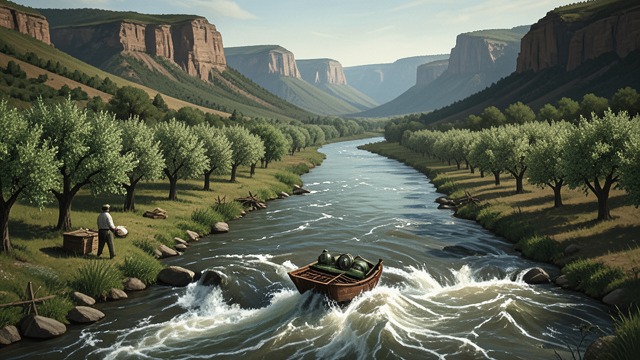
The Fast River
A living landscape
Ben remembers the Columbia River as a powerful presence beside orchards, canyons, and open sage. His childhood sense of home is inseparable from its movement.
Land and livelihood
The family orchard depends on water and labor, joining the river's natural abundance to human cultivation. The landscape is both resource and inheritance.
A measure of change
Decades later, Ben's memories reveal how much the basin has been altered. The river remains familiar, yet no longer exists in the form he knew.
Water Reassigned
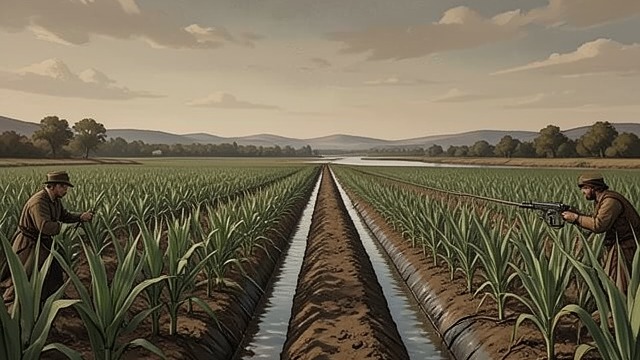
Water Reassigned
The irrigated basin
Ben travels through fields and orchards where water has been diverted across formerly arid land. The country is productive but profoundly remade.
A moral contradiction
He recognizes that growers like his father acted without evil intent, yet their work helped transform the river and desert. Love for the orchard cannot erase the cost to the river.
Inheritance reconsidered
Ben sees that his own life spans both the old landscape and its replacement. The view complicates his attachment to the place he calls home.
Cultivation at the Edge
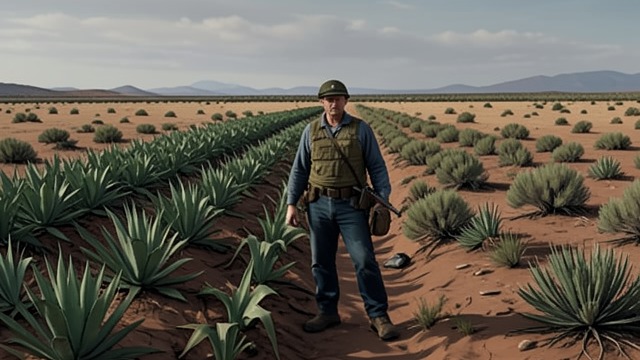
Cultivation at the Edge
A sharp boundary
Ben sees cultivated fields end abruptly at the sagebrush desert. The clean division makes human transformation visible rather than gradual.
Temporary abundance
He understands that crops depend on continued irrigation and may fail if the water stops. The apparent fertility does not mean the land has ceased to be arid beneath the fields.
A landscape with limits
The desert's persistence challenges the idea that human control is permanent. Ben's return is also a return to a place whose future remains unsettled.
The Old Orchard Revisited
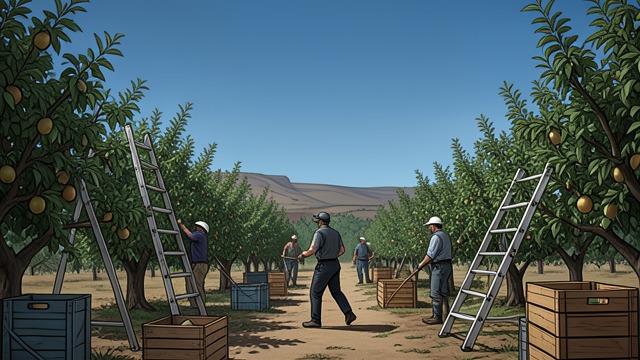
The Old Orchard Revisited
A view from the road
Ben recognizes the place where he was raised as the bus passes his family's former orchard. The house is gone, while the poplars remain.
Memory meets harvest
Ladders, bins, and workers fill the modern orchard. The scene echoes his childhood labor but also reveals a different agricultural world.
The past remains legible
Ben's connection to the land survives its physical transformation. The orchard is no longer his family's, yet its seasonal work still carries memory.
A Changed Homecoming
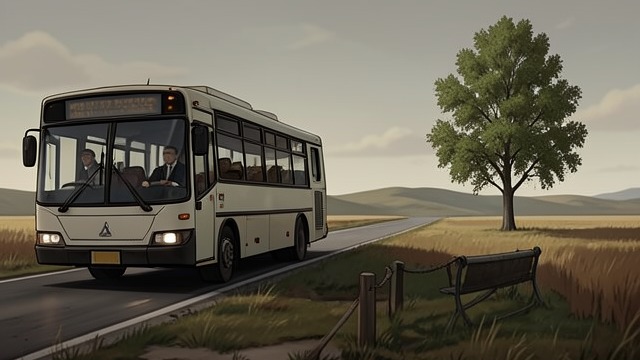
A Changed Homecoming
Crossing the basin
Bea drives Ben back across the Columbia and through the region where he grew up. He points out the old family place and acknowledges how much has changed.
Beauty without restoration
Ben still finds the land beautiful, but beauty does not restore the vanished orchard or river as he remembered it. His attachment must include loss.
Belonging made complex
The journey home returns him to a place shaped by both memory and alteration. Home is not an untouched landscape, but a relationship Ben chooses to resume.
Ben's childhood in the orchard country
During the drive east after the crash
As Ben approaches Quincy
On the bus past the former family land
During Bea's drive west
